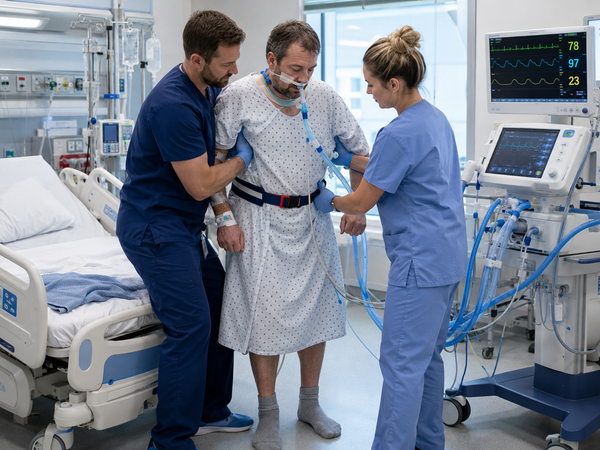
ICU Mobilisation: Evidence, Safety Screening and Progression Criteria
Learn ICU mobilisation using Hodgson red-yellow-green safety criteria, ABCDEF bundle context, progression from passive ROM to ambulation, and ICU-acquired weakness prevention.

Learn ICU mobilisation using Hodgson red-yellow-green safety criteria, ABCDEF bundle context, progression from passive ROM to ambulation, and ICU-acquired weakness prevention.
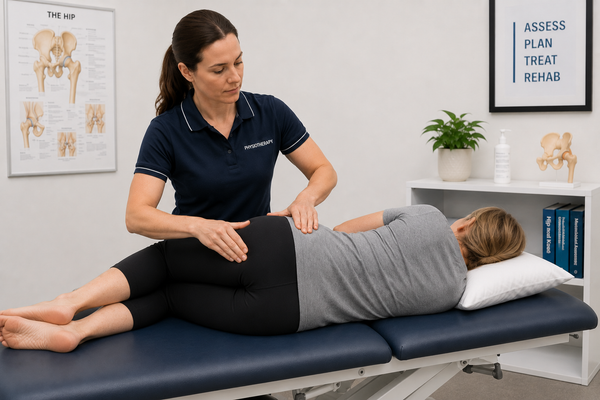
Although the condition was long labelled trochanteric bursitis, the dominant pathology is a tendinopathy of the gluteus medius and minimus rather than a primary bursitis.
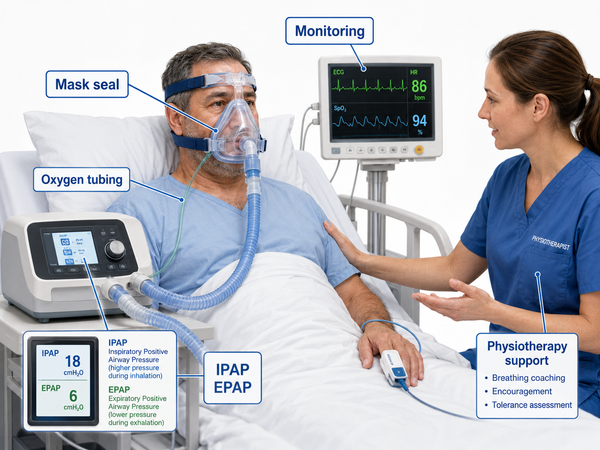
Exam-prep guide to NIV for physiotherapy students, covering CPAP vs BiPAP, AECOPD indications, common settings, post-extubation NIV, mobilisation, secretion clearance and weaning.
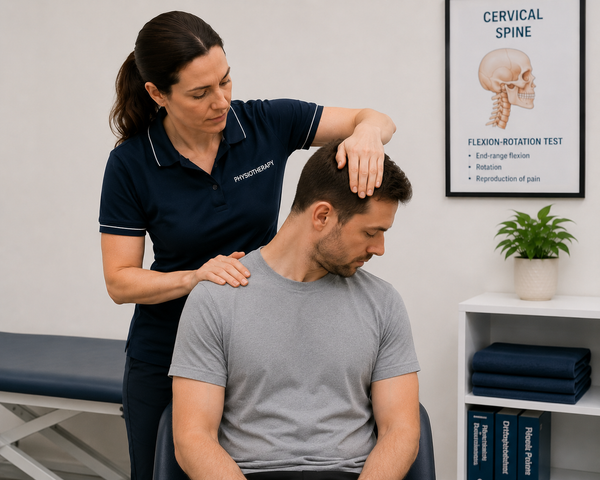
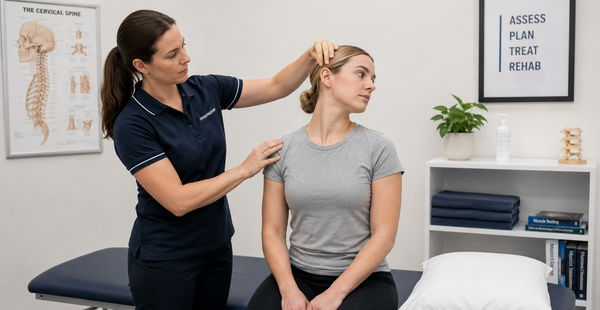
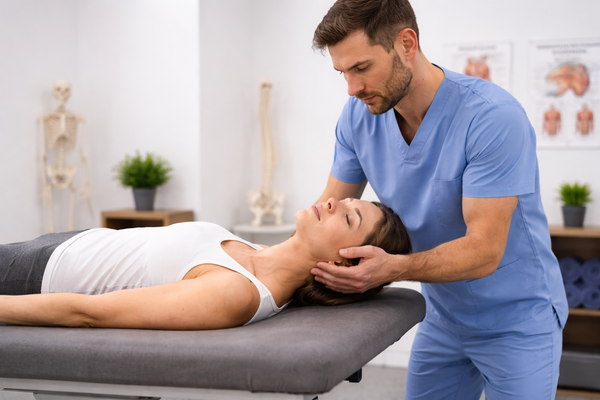
Cervicogenic headache is a secondary headache in which pain perceived in the head is in fact referred from a disorder of the cervical spine, most often the upper cervical segments.
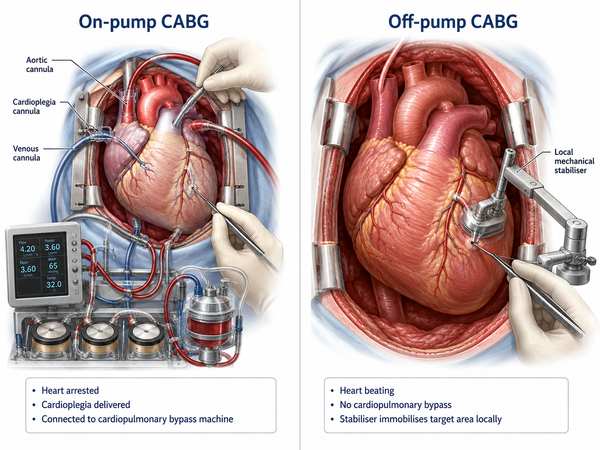
Understand off-pump versus on-pump CABG, including surgical differences, pulmonary complications, mobilisation timing and key implications for physiotherapy.
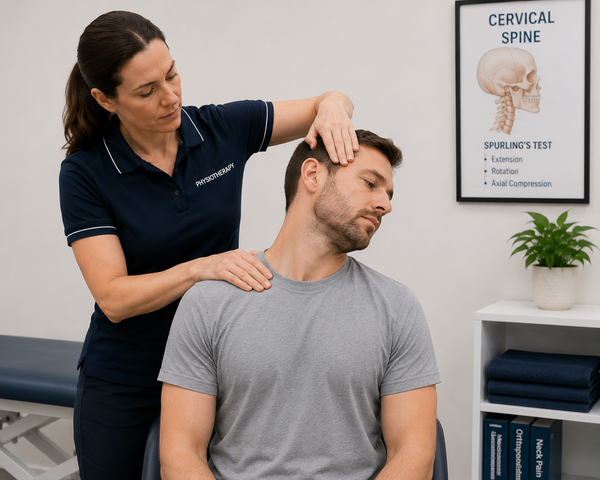
Since no single clinical test reliably confirms the diagnosis of cervical radiculopathy in isolation, contemporary practice relies on a validated cluster of tests to raise or lower the probability of nerve root involvement.
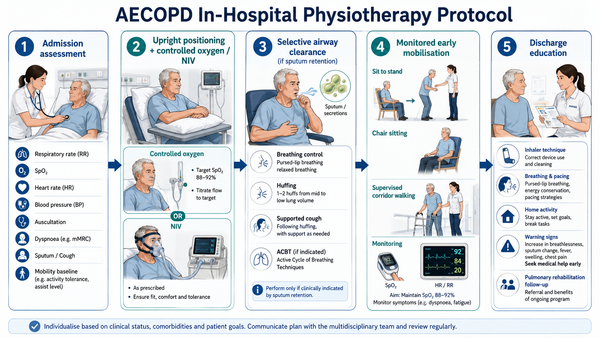
Learn a step-by-step in-hospital physiotherapy protocol for AECOPD, including assessment, NIV, positioning, airway clearance, mobilisation safety and discharge criteria.
A structured classification framework allows the clinician to reason from a broad presenting complaint toward a defensible working category, and to match the intervention to that category rather than applying a uniform protocol to every patient.
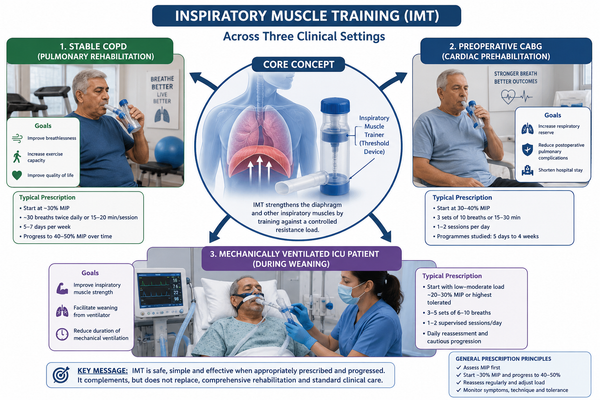
Learn how inspiratory muscle training works, how to prescribe 30–50% MIP, which devices are used and what evidence supports IMT in COPD, CABG and ICU patients.
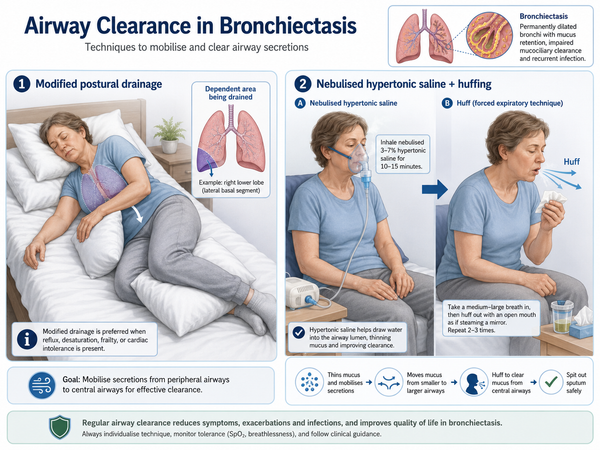
A guide to bronchiectasis physiotherapy covering lobe-specific postural drainage, modified positions for elderly and cardiac patients, the move away from prolonged head-down tilt, and how nebulised hypertonic saline fits into modern airway clearance.
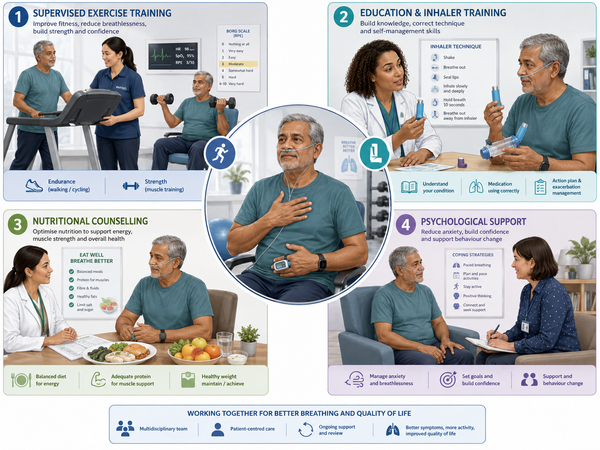
Learn the components, duration, outcome measures and evidence for pulmonary rehabilitation in COPD, ILD and other chronic lung diseases.
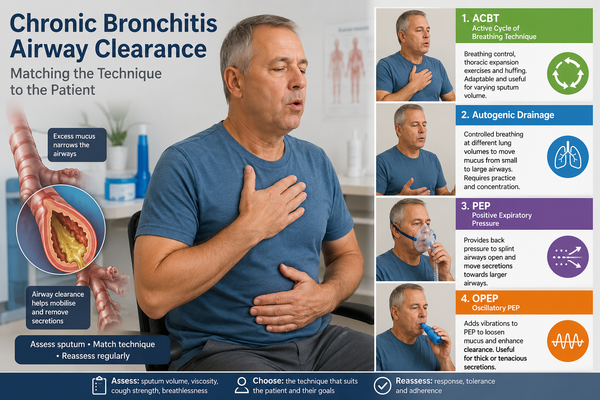
Compare ACBT, autogenic drainage, PEP and oscillatory PEP for chronic bronchitis, with teaching steps, evidence and a practical decision tree.
audience:clinical
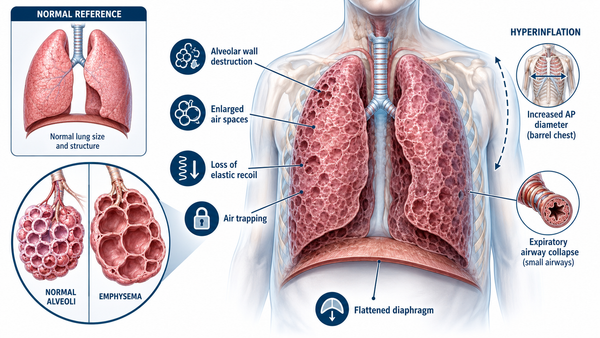
Understand centriacinar and panacinar emphysema, hyperinflation, flattened diaphragm, barrel chest, pursed-lip breathing and evidence-based physiotherapy management.
audience:clinical
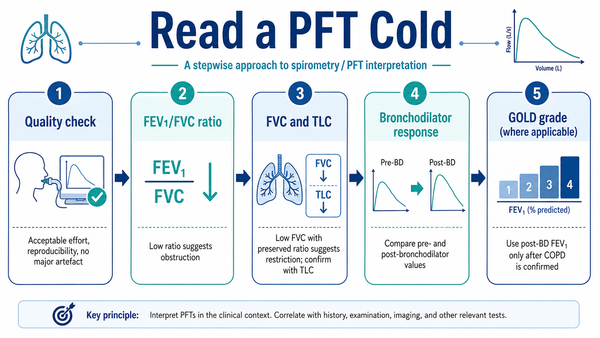
Learn to interpret spirometry step by step: FEV1, FVC, obstructive and restrictive patterns, bronchodilator response, GOLD staging and loops.
audience:clinical
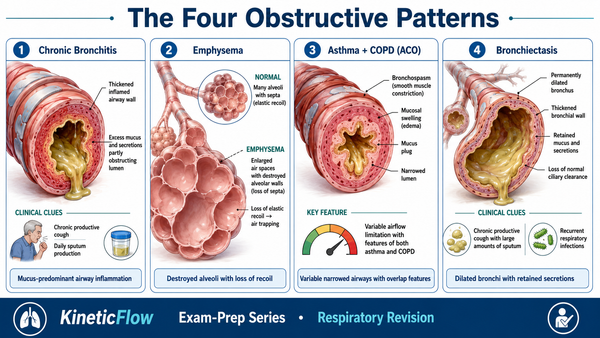
Learn how to distinguish chronic bronchitis, emphysema, asthma–COPD overlap and bronchiectasis using pathology, clinical features, PFT findings and physiotherapy implications.
audience:clinical
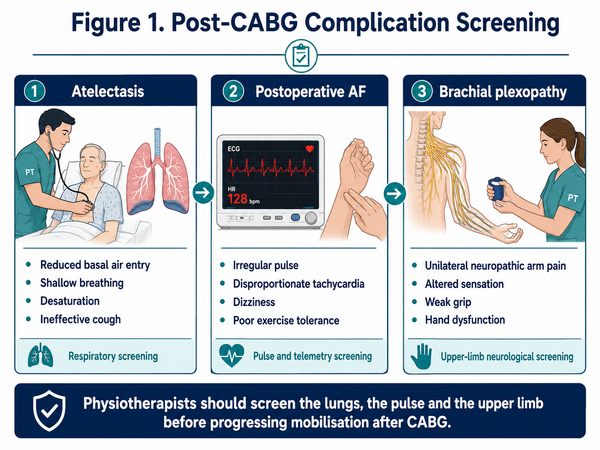
Learn how physiotherapists identify and manage atelectasis, postoperative atrial fibrillation and brachial plexopathy after CABG, including the causes of left-lower-lobe atelectasis.
audience:clinical
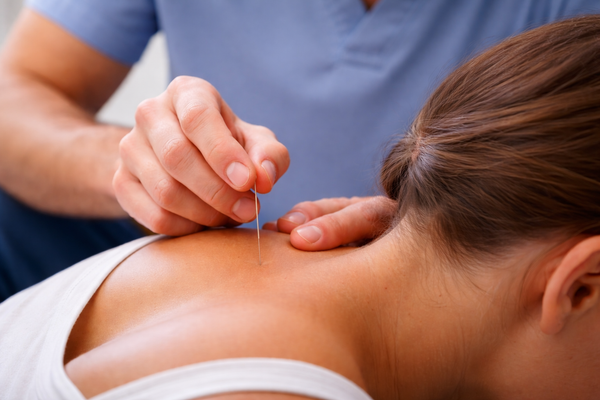
Dry needling is the insertion of a thin filament needle into a myofascial trigger point without injecting any substance.
audience:clinical
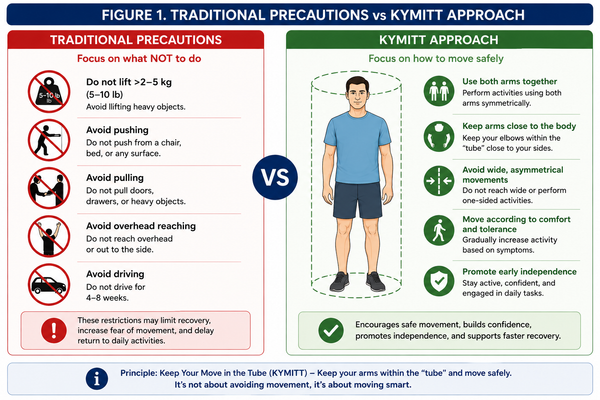
Explore how modern evidence is reshaping sternal precautions after cardiac surgery. Learn the principles of Keep Your Move in the Tube (KYMITT), current research, and practical physiotherapy advice for post-sternotomy patients.
type:evidence-summary
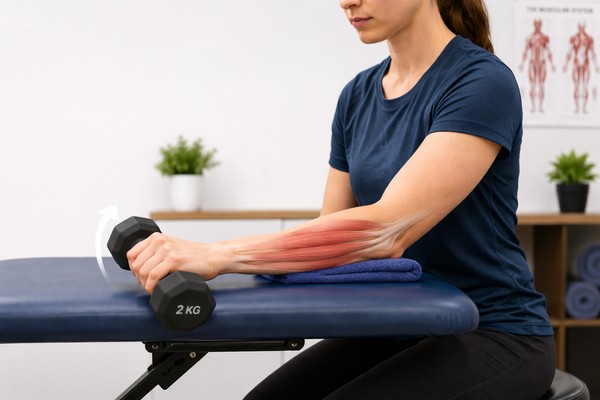
This blog compares the two different kind of loading used for the management of lateral elbow tendinopathy, distinguishes the established findings from prevailing assumptions, and translates the conclusions into practical guidance for exercise prescription.
audience:clinical
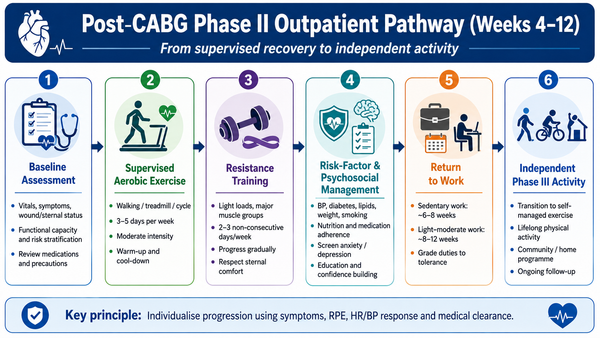
Learn the Phase II post-CABG rehabilitation protocol for weeks 4–12, including FITT exercise prescription, beta-blocker target HR, return to work and psychosocial screening.
type:protocol
Learn how to diagnose the common posterior-canal variant of Benign paroxysmal positional vertigo (BPPV) by means of the Dix-Hallpike test and its treatment with the Epley maneuver, set out sequentially, together with the supporting evidence and the relevant safety considerations.
audience:clinical
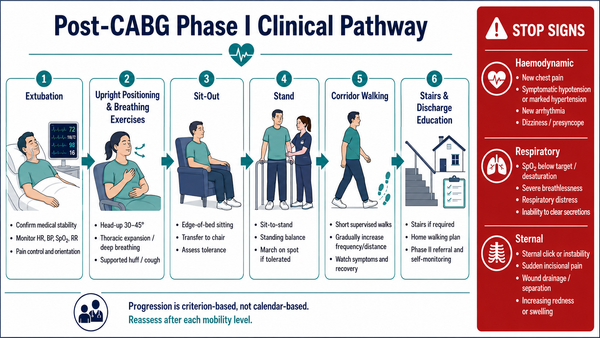
A day-by-day Phase I physiotherapy protocol after CABG, covering positioning, breathing exercises, mobilisation milestones, sternal care and red flags that pause progression.

type:practice-mgmt
A defensible discharge note concludes the episode, communicates the outcome, and, when executed well, demonstrates that the decision to discharge was sound.
audience:clinical
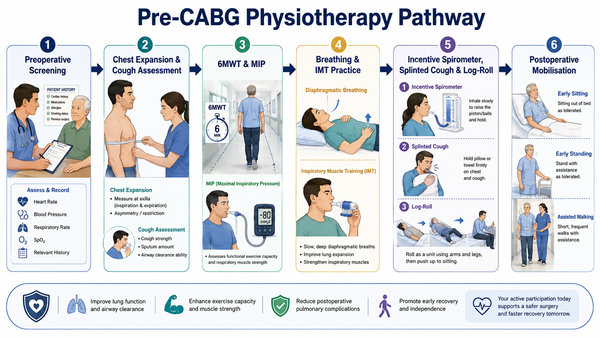
Learn the complete pre-CABG physiotherapy protocol, including respiratory assessment, 6MWT, IMT, incentive spirometry, cough training and viva points.