audience:clinical
How to Read PFTs: FEV1, FVC, GOLD Staging and Bedside Interpretation
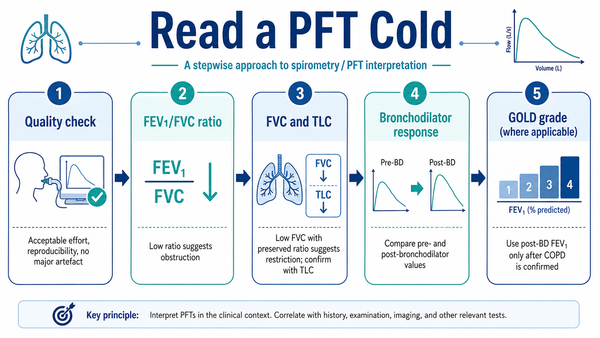
Learn to interpret spirometry step by step: FEV1, FVC, obstructive and restrictive patterns, bronchodilator response, GOLD staging and loops.

audience:clinical
Learn to interpret spirometry step by step: FEV1, FVC, obstructive and restrictive patterns, bronchodilator response, GOLD staging and loops.
audience:clinical
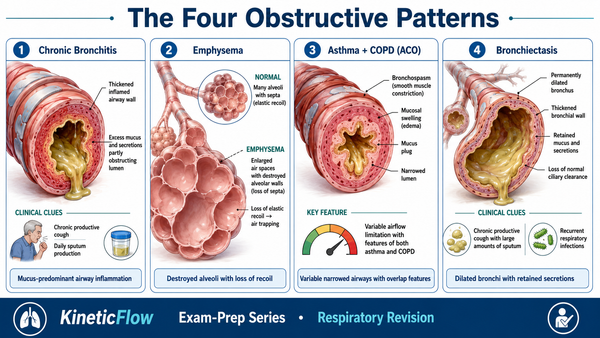
Learn how to distinguish chronic bronchitis, emphysema, asthma–COPD overlap and bronchiectasis using pathology, clinical features, PFT findings and physiotherapy implications.
audience:clinical
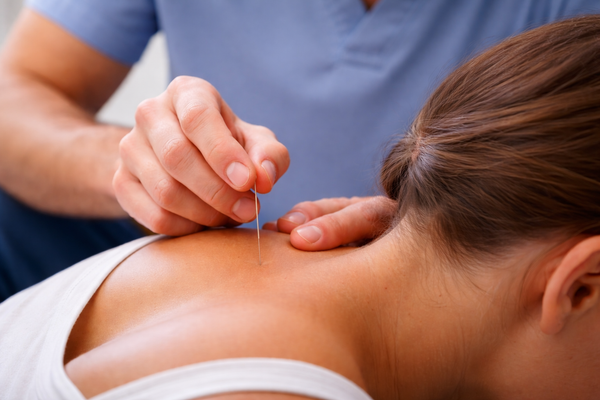
Dry needling is the insertion of a thin filament needle into a myofascial trigger point without injecting any substance.
type:protocol
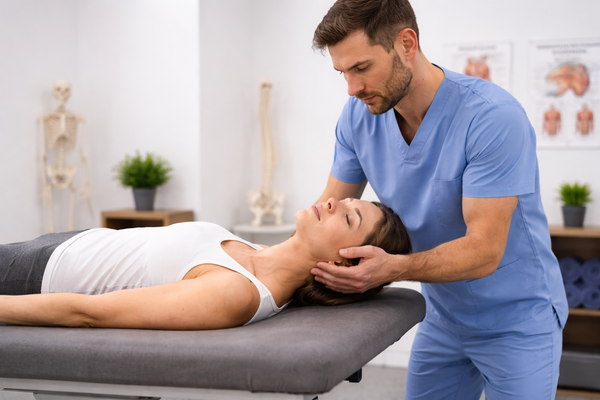
Learn how to diagnose the common posterior-canal variant of Benign paroxysmal positional vertigo (BPPV) by means of the Dix-Hallpike test and its treatment with the Epley maneuver, set out sequentially, together with the supporting evidence and the relevant safety considerations.
type:practice-mgmt
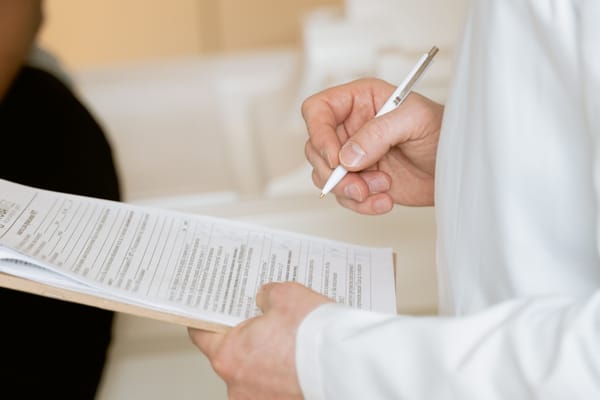
A defensible discharge note concludes the episode, communicates the outcome, and, when executed well, demonstrates that the decision to discharge was sound.

type:practice-mgmt
This article compares the two predominant approaches, the familiar SOAP note and the structured case-sheet template, and sets out how to capture clinical reasoning rather than mere data, irrespective of the format chosen.

type:practice-mgmt
This guide examines four core instruments that, collectively, address the majority of musculoskeletal caseloads: a pain score, a low back measure, a knee measure, and an upper limb measure.
audience:clinical
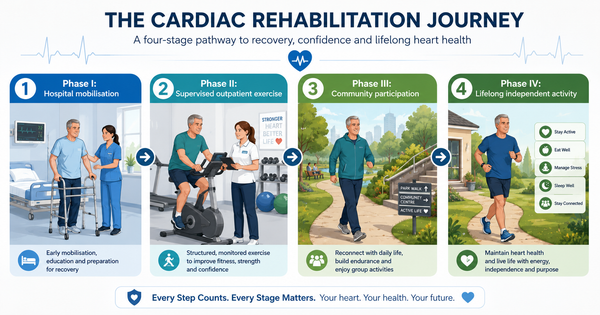
Understand cardiac rehabilitation phases I–IV, the physiotherapist’s role, key outcome measures, and how phases overlap in Indian practice today.
type:assessment
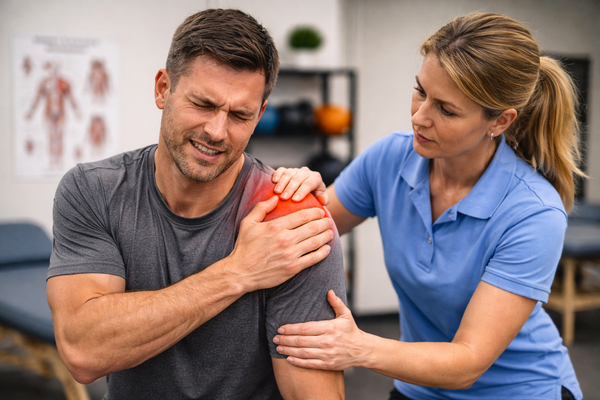
This blog will help you determine what RCRSP means, assess it in a structured way, and classify patients so that management matches the presentation.
type:evidence-summary
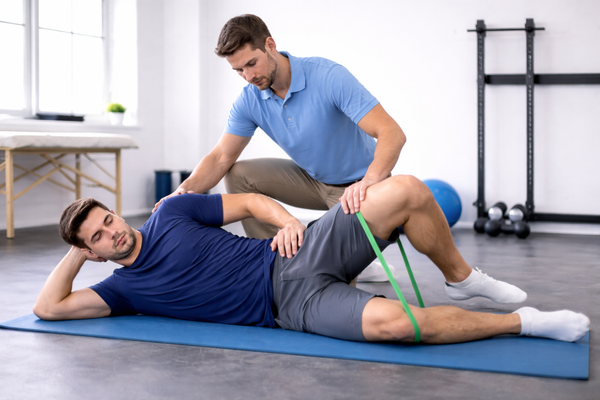
Patellofemoral pain (PFP) is among the most frequently encountered presentations in musculoskeletal practice, affecting individuals across the lifespan from adolescence to older adulthood.
condition:knee-oa
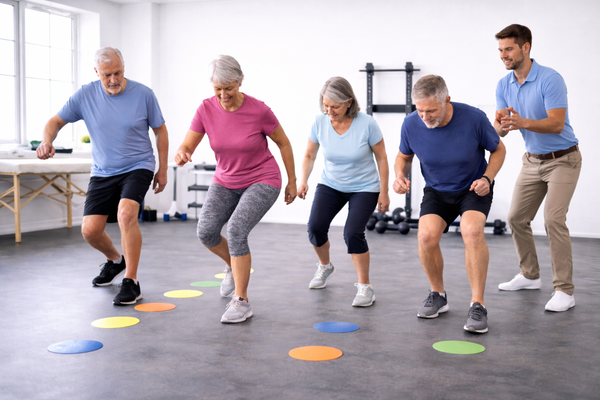
GLA:D is a structured, physiotherapist-led programme of patient education plus supervised neuromuscular exercise, designed to translate the evidence into routine clinical care.